
- Tashkent speaks
- 18.07.2026, 19:13
A new approach to the development of mahallas was presented in Tashkent
On July 18, a large-scale presentation and teambuilding event dedicated to the development of Tashkent mahallas and the new principles of activity of the “mahalla seven” was held at the “Humo Arena” sports palace.
The event, led by Tashkent City Mayor Shavkat Umurzakov, was attended by more than 5,000 people — representatives of city and district administrations, heads of departments and organizations, as well as members of the “mahalla seven” from all 585 mahallas in the capital.
Participants not only familiarized themselves with the main directions of the new system but also developed practical tasks in a team format. The business plans of districts and mahallas, sources of income, expenditure directions, priority projects, and mechanisms for their implementation were at the center of attention.
The main goal of the new approach is to turn the mahalla from a place where the population applies for certificates or social assistance into a full-fledged center for the development of the territory.
These tasks are provided for in the Decree of the President of the Republic of Uzbekistan dated June 24, 2026, PF-116 “On Additional Measures to Effectively Organize Mahalla Management”. The document is aimed at strengthening the role of the mahalla, increasing the responsibility of its employees, and solving the problems of the population directly on the ground.
Work in each mahalla should be based on a clear understanding of the real situation: how many people live here, which families need support, where it is necessary to create jobs, what social and infrastructural problems exist, and what projects can be implemented.
It is about moving from responding to individual appeals to the systematic and consistent development of the territory.
For each mahalla, the main problems, available opportunities, and priority projects must be identified. These may include repairing roads, improving the lighting system, creating jobs, supporting entrepreneurship, landscaping yards, helping needy families, preventing offenses, or working with youth.
For each project, it must be clear how much funding is required, from which sources it will be attracted, who is responsible for completing the task, and what specific result needs to be achieved. Such planning makes it possible to use resources rationally and reduce the risk of started projects not being completed.
During the presentation, using the example of the “Novza” mahalla in Chilanzar District, participants were shown how the activities of the “mahalla seven” should be linked to the district’s business plan and the overall tasks of the socio-economic development of the territory.
Working in teams, participants analyzed specific situations, identified the problems and resources of the mahalla, distributed areas of responsibility, and proposed practical solutions. This format clearly demonstrated that the sustainable development of the territory is possible only through the coordinated activities of all responsible structures.
In the new system, a special place is given to the “mahalla seven”, which consists of the mahalla chairman, the hokim’s assistant, the women’s activist, the youth leader, the prevention inspector, the social worker, and the tax inspector. In addition, mahalla bankers also participate in the activities of the mahalla.
Everyone is responsible for their direction, but they must work as a single team. For example, the problem of unemployment cannot be solved by the efforts of only one specialist. This may require vocational training, assistance in obtaining a loan, formalizing social support, assistance in starting a business, or finding a suitable employer.
Therefore, one of the main tasks of the new approach is to establish effective cooperation between all responsible employees so that a citizen does not have to apply to various organizations and explain his problem again every time.
The activities of the “mahalla seven” will be assessed not by the number of meetings held and reports prepared, but by specific results: growth in population income, creation of jobs, reduction of poverty, decrease in crime, solution of social issues, and improvement of living conditions.
Special attention was paid to the participation of the population itself. It is they who know best what issues need to be resolved in their home, street, and mahalla.
The population should understand the economy of their mahalla, receive information about planned projects, their funding sources, and the implementation process, and also have the opportunity to promote their initiatives and participate in the discussion of territory development plans.
The main goal is to turn the development of each mahalla into a clear and consistent process based on the real needs of people.
Within the framework of the event, a special training system was also presented for all members of the “mahalla seven”. They will have to master new methods of planning, working in a team, cooperating with state bodies, and evaluating achieved results.
The new approach is expected to help mahallas identify existing problems faster, use available resources more efficiently, and achieve tangible changes that the population can see in their daily lives.
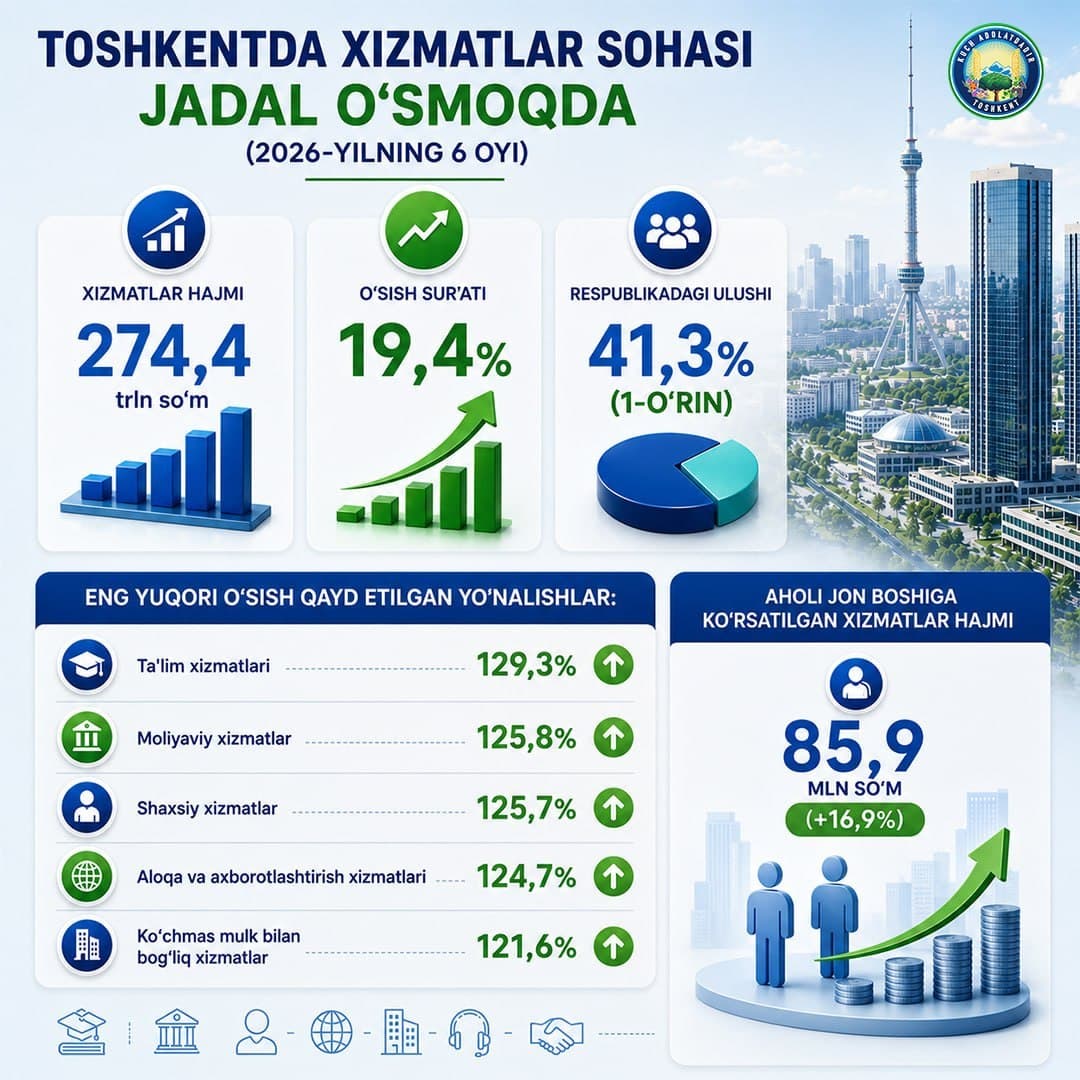
⚡️In the first 6 months of 2026, the volume of services in the capital amounted to 274.4 trillion soums, showing a 19.4%...
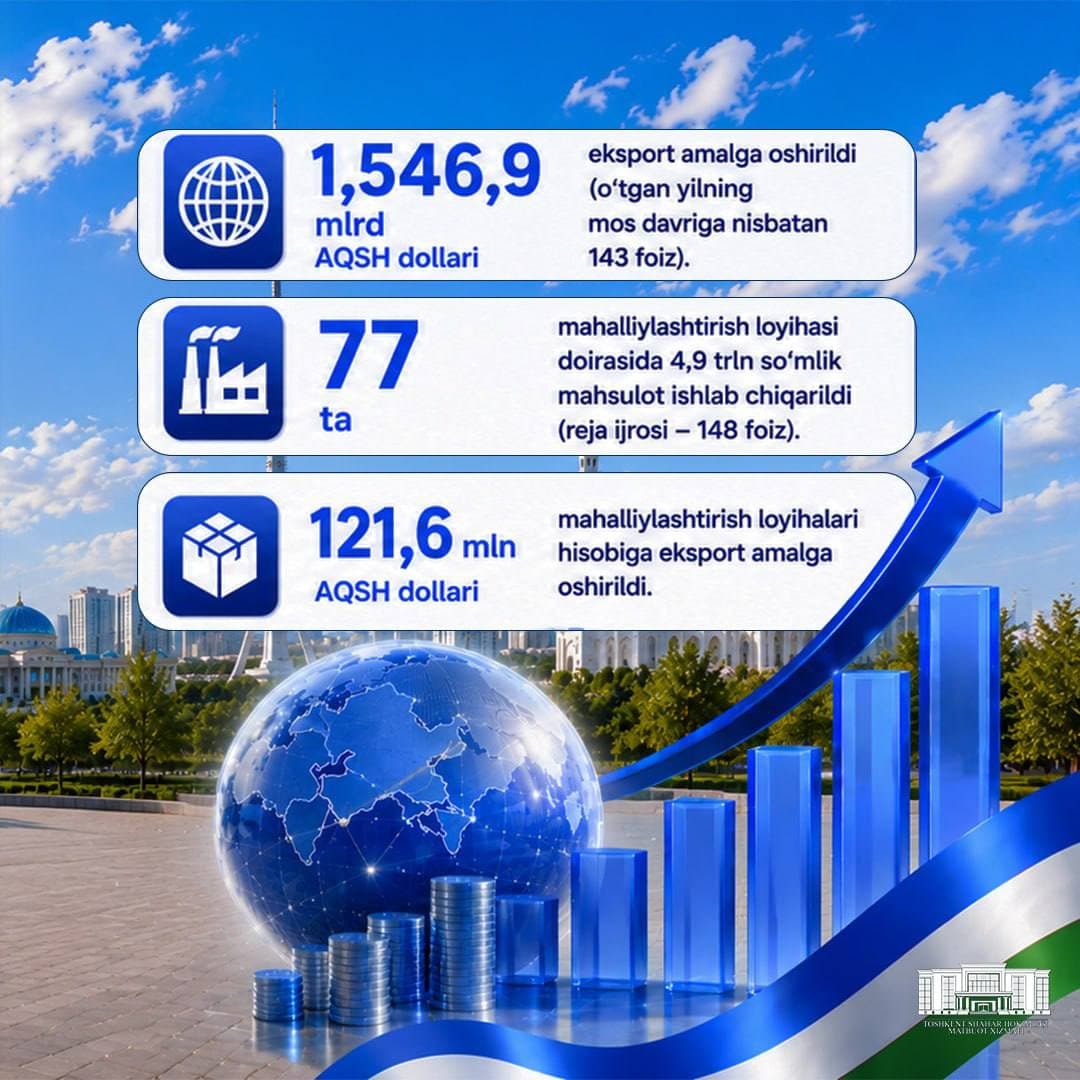
In the first half of 2026, Tashkent city became one of the leading regions of the country in terms of attracting investm...

➡️Starting from July 16, a special service to assist graduates in employment and starting their professional activities ...
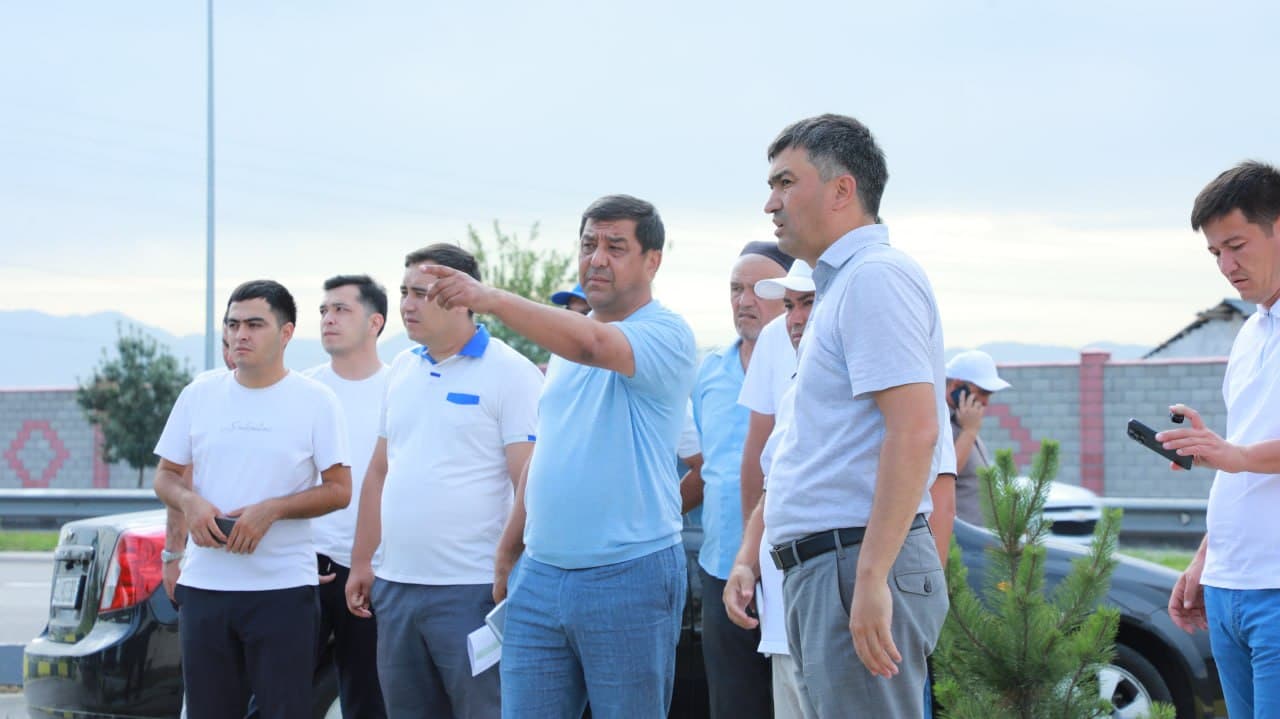
➡️ Today, under the leadership of Bektemir District Hokim N. Abdurakhmanov, with the participation of heads of organizat...