
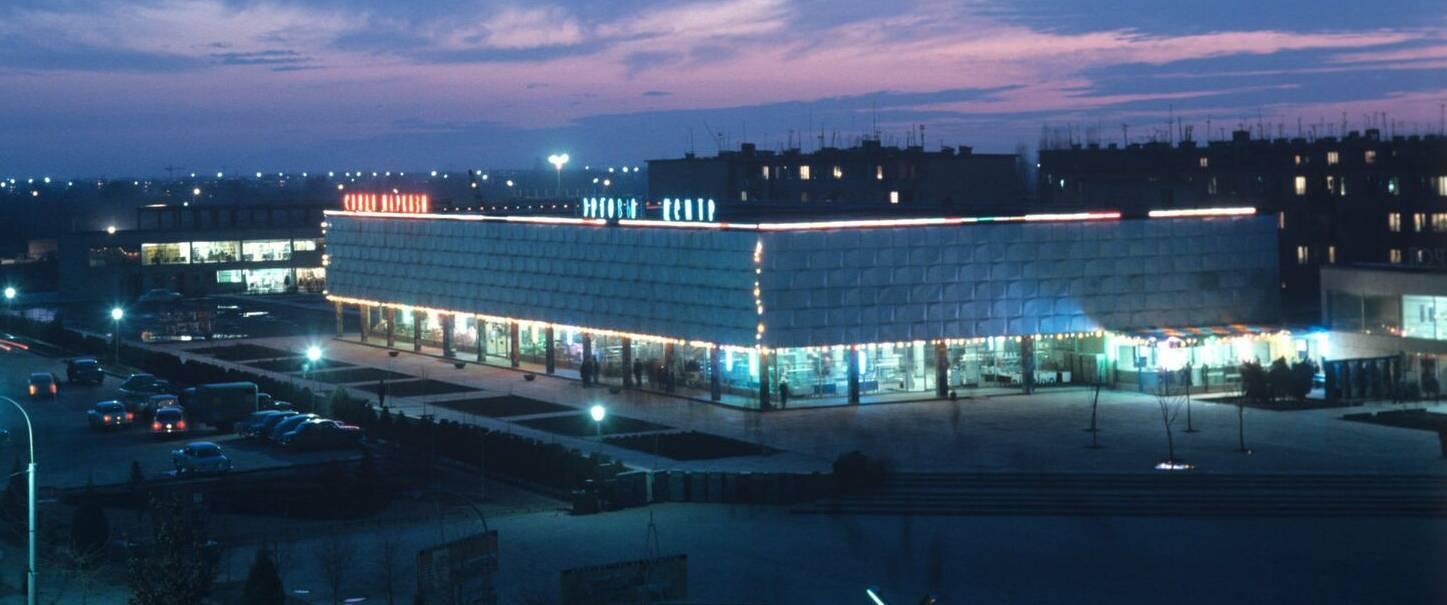
The shopping centre is the most famous and iconic place in Chilanzar. It opened in 1964 to mark the 40th anniversary of the Uzbek SSR and was, at the time, the largest retail facility in Central Asia. Back then it stood at the “end of the world” — the frontier of the city’s new development — and legends circulated among Tashkent residents about the gigantic new shopping centre. It was a must-visit for tourists and architectural specialists alike. The building had air-conditioning, freight elevators from basement warehouses, buffets and a café. For decades during the era of shortages, its two floors packed with household goods, industrial products, shoes, clothing, fabrics, televisions, vinyl records, dairy and meat products attracted shoppers from far and wide.
At opening, the retail area was 3,668 m² and housed 9
departments (household and food) with 53 sections. Customers enjoyed extra
services: fabric cutting, home delivery of large items, watch engraving and
repair.
Later, architects studied and replicated the unique
(for its time) experiment of placing cultural and social service facilities in
the middle of residential areas. To the left of the main building appeared
household-service blocks: fashion atelier, photo studio, rental point, shoe and
metal repair, hairdresser and beauty salon. On the right, a post office still
operates; before the internet era there was also a long-distance telephone
exchange. Next to the centre were built the winter “Chayka” cinema and the
open-air “Raketa” cinema; there used to be a fountain and flowerbeds. Later,
the “Chilanzar” restaurant opened on the left side.
Sixty years on, the shopping centre remains the heart
of Chilanzar life. Unfortunately, the original exterior with its aluminium
volumetric pyramids has been lost. The building is now clad in plastic and
fitted with large advertising screens. After the 2024 reconstruction, the
retail space was expanded by pushing the walls forward into the former car
park.
Today it houses a Macro supermarket, numerous shops,
pizzerias and cafés with fresh pastries. In front of the cinema stands a
monument to Yuri Gagarin. On the other side of the centre is a popular bazaar
serving residents of the 1st, 2nd, 3rd and 4th quarters. The square in front of
the Gagarin monument and Gagarin Street opposite are favourite evening hangouts
for table-tennis players, mothers with children, and owners of skateboards,
scooters and bicycles.
Let us remember with gratitude the authors of this
architectural ensemble — Tashkent architects V. L. Spivak, A. B. Kryukov, A. A.
Sidelnikov and Ye. F. Yasnogorsky.
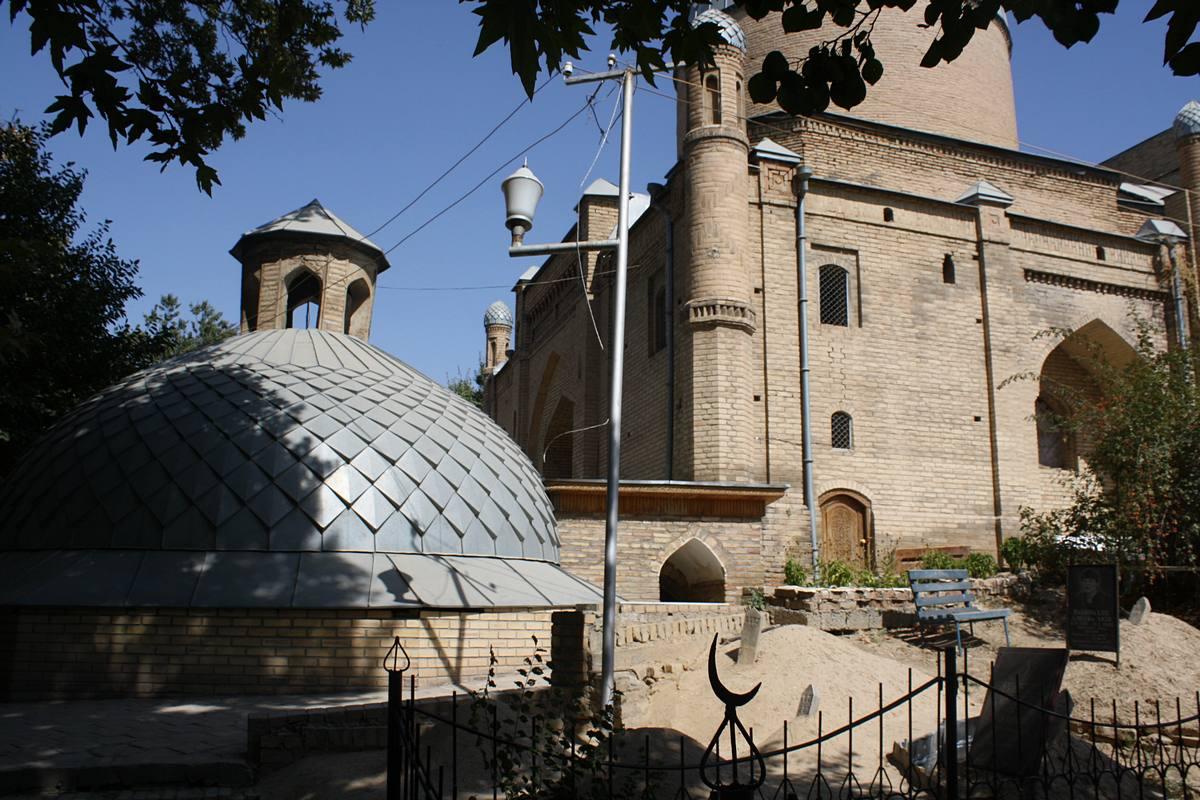
Sheikh Zaynuddin (also known as Zayniddin), the patron saint of Tashkent, was born in Baghdad in t...
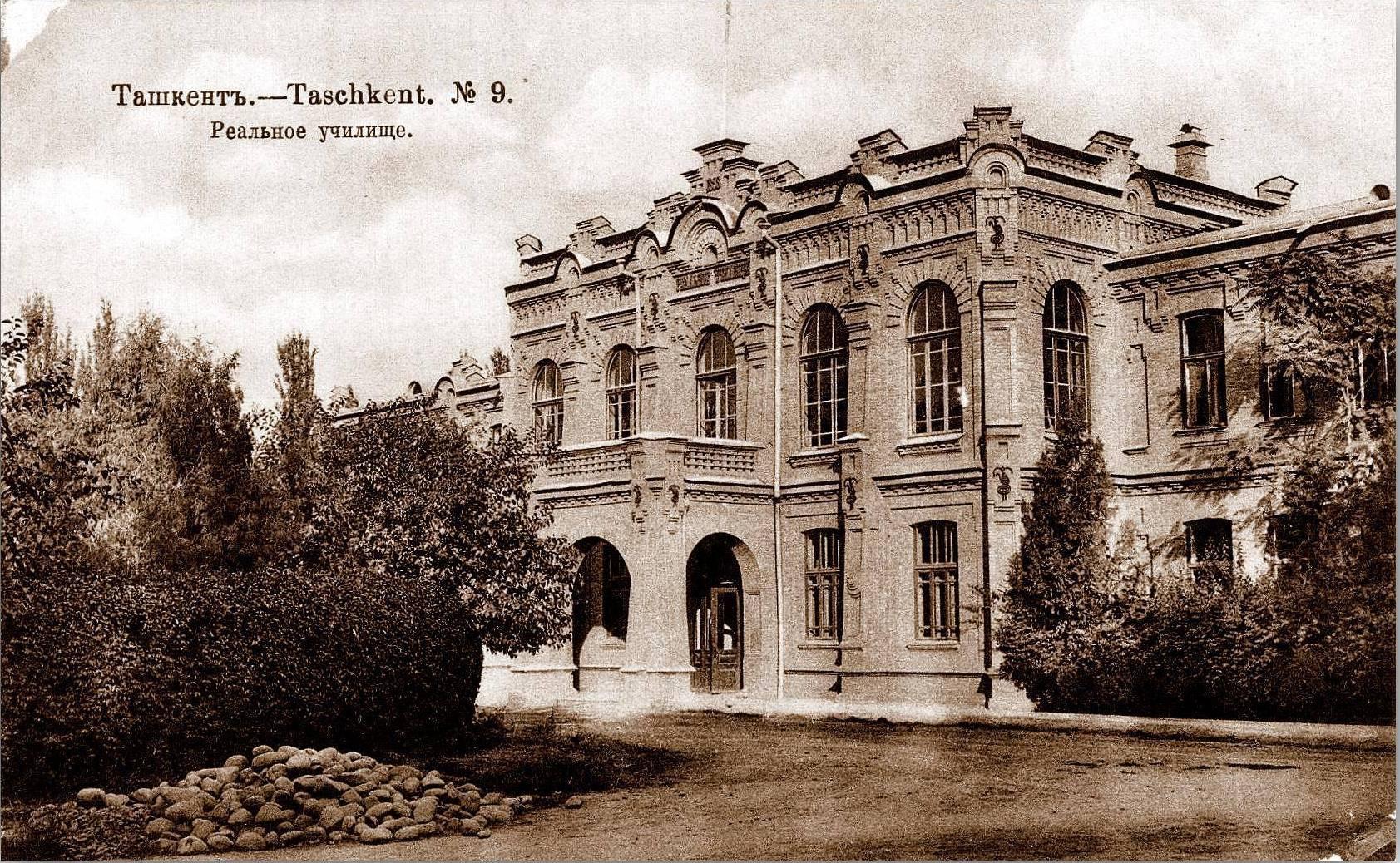
In 1894, the first real school was opened in Tashkent. These schools were called "real" because, un...
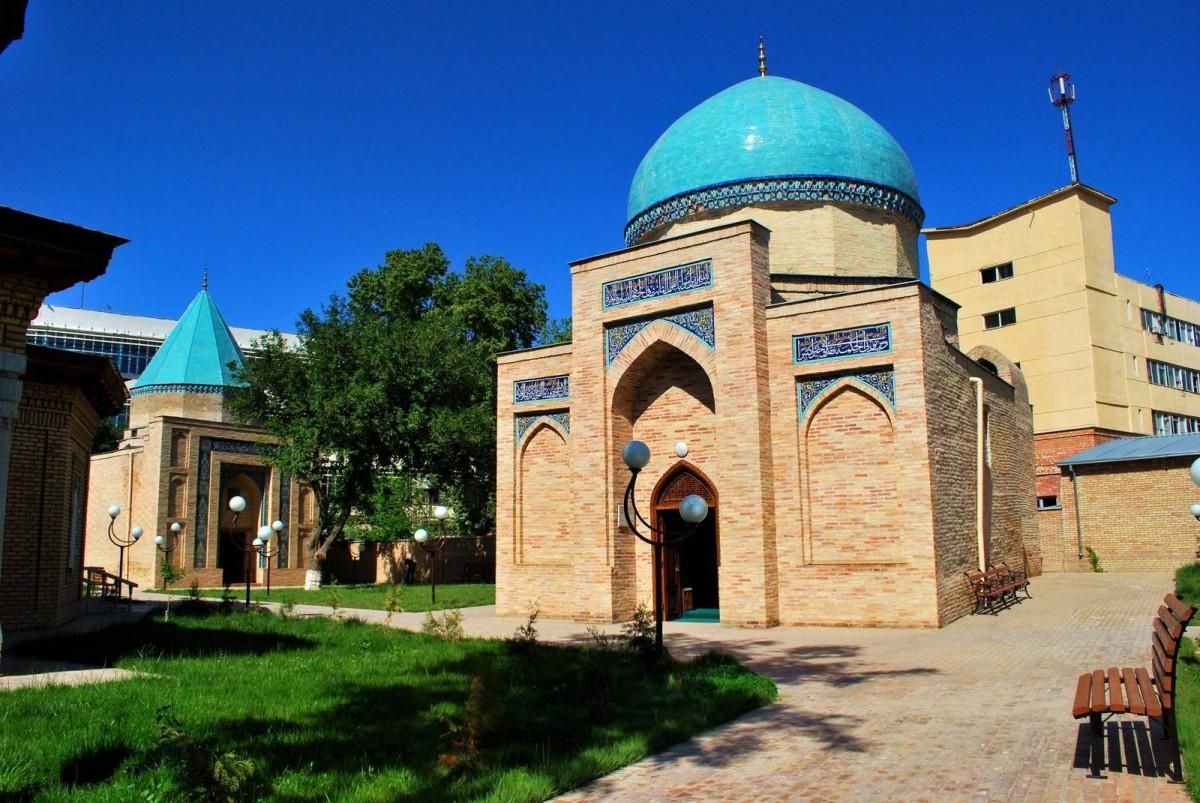
The Sheikhantahur Mausoleum (Sheikh Khavendi at-Tahur) is the main shrine of the Sheikhantahur arch...
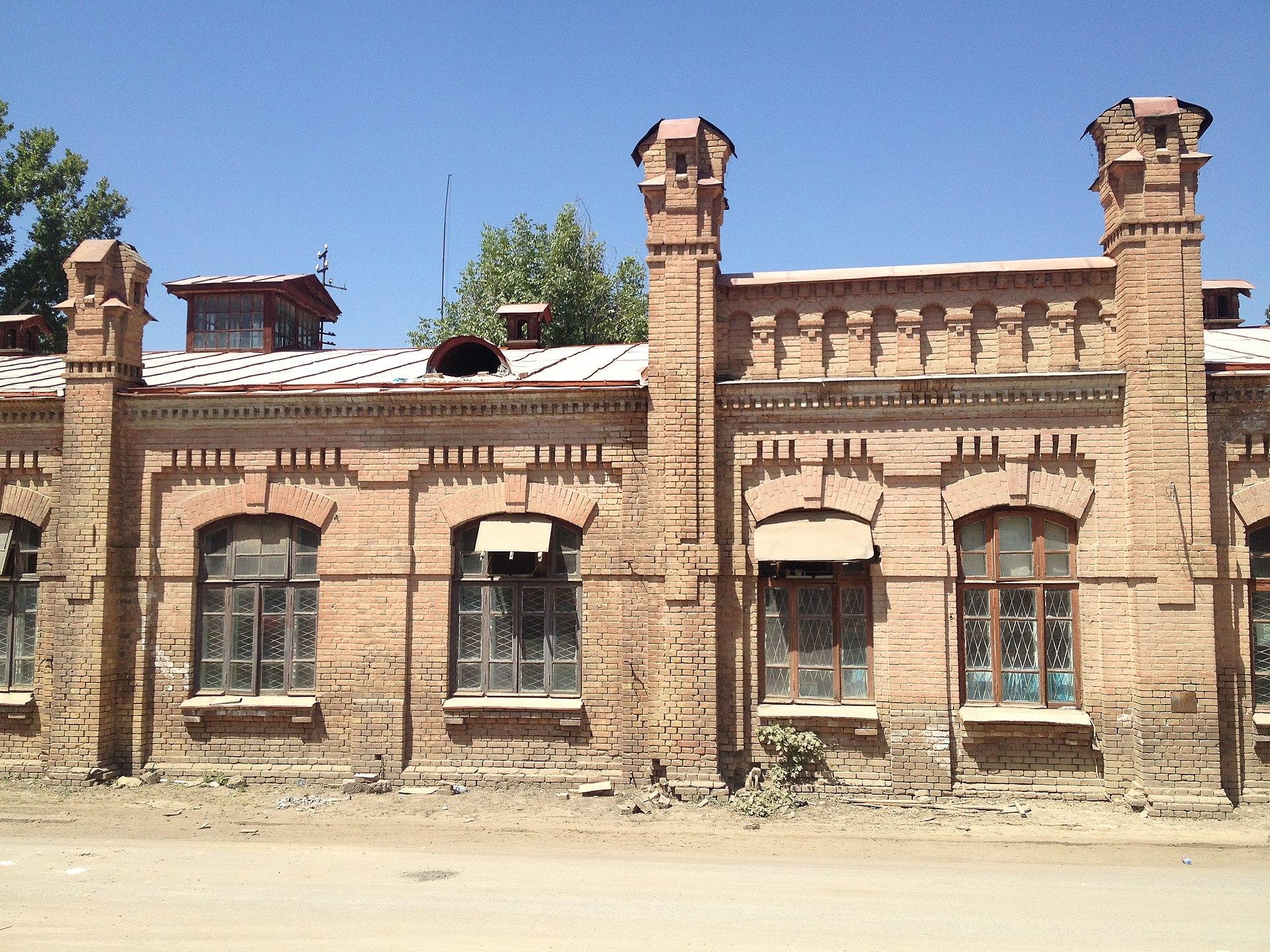
At the end of the 19th century, two orphanages operated in Tashkent — the Alexandrovsky and the Kau...